[00:00:00] SPEAKER 1:
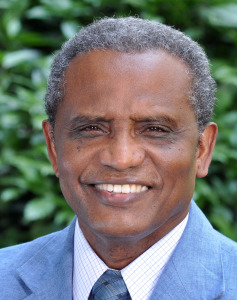
Um, a very warm welcome to you all on behalf of the Tanner Committee to this, the third and final event in this year’s, uh, Tanner Lecture Series. Uh, we’ve been very fortunate to, uh, have such a, uh, distinguished speaker, Professor Abdullahi An-Na’im, and an equally distinguished, uh, panel of commentators, uh, as, as distinguished as they are perspicacious. We, uh, we are going to alter somewhat the, uh, order of events from that, uh, listed in the program originally.
Um, uh, we’ll first have, uh, Professor An-Na’im, uh, talk for something like fifteen minutes, and then we’ll have the, uh, commentators, uh, uh, come up to the, the podium seriatim. Uh, we’ll first have, uh, John Bowen, the Dunbar-Van Cleve Professor of Arts and Sciences at Washington University, followed b- by, uh, uh, Qasim Zaman, Professor of Near Eastern Studies at Princeton University, uh, followed by Wael Hallaq, the Avala-Avalon Foundation Professor in the Humanities at Columbia University. Uh, they’ll speak, uh, for 10 or 15 minutes each, and then, uh, they’ll have a roundtable discussion amongst themselves up here, and at some point, uh, we’ll open it up to comments and questions, uh, from the audience.
Just a reminder, uh, to please turn off your cell phones because we’re, we’re taping the event, and also, uh, therefore for the, uh, questions afterward, if you could wait until the microphone, uh, uh, gets to you, that would be, uh, very helpful. There will be a reception afterwards, which we invite and encourage you to attend just, uh, here. Uh, the doors, I think, slide away, and a magnificent buffet is revealed.
So, uh, please, please stick around for that. Um, but first, uh, please join me in welcoming Professor An-Na’im, the Charles Howard Candler Professor of Law at Emory University, uh, who will be speaking to us first. Thank you.
(applause)
[00:02:16] PROFESSOR AN-NA’IM:
I’m going to miss this.
(laughter)
It, it has been a very exciting and, um, intense, uh, three days, And I appreciate the wisdom, actually, of the, of the Tanner plan. and I thank Professor Tanner for the privilege and also the, the Tanner committee and Ellen for the tremendous hospitality and, and warmth that we have enjoyed here. And I’m grateful to my three good colleagues, as Wa’il would say.
Yes, this is- he kept referring to me as my good colleague, my good… Uh, to my, my good, um, friends I would say, uh, for their generosity in joining us.
Um, I thought, of course, uh, let me explain about why I’m not doing something that some of you may expect. I’m not going to respond to the three sets of, uh, responses because they were not really responses, they are built as commentaries. And understand from Jay and, and that the process should be that, uh, for the publication, I should not alter my, um, my text in a way that makes their comments marginalized or redundant.
And, and so I will keep m– the part of my text relevant to their remarks as it is, And I will also try to just minimize, sort of minimally, uh, sort of try to improve, uh, the coherence, I hope, of the text otherwise, and I will add something that I will explain now. But the point is that I’m going not to respond except to say that I found all three sets of comments tremendously instructive and insightful and helpful, and I do not see them as inconsistent with my basic thesis. I see them more as complementary, uh, to what I’m trying to do.
So I’m not going to comment in that sense. But what I will do is, th-there is a couple of questions that were raised the first day that I… You know, my mom used to call this rewinding the tape.
You know, after you leave, and then you think, I wish I said this, I wish I didn’t say that. So I, I was, uh, set up in that process, I thought I would revisit these two issues, uh, briefly to try to explain what I’m trying to do or say on them, and then I’m going to present two case studies to try to present a more concrete sense of what I see we can do about transcending imperialism as of now, immediately. And this has to do with my first remarks or, uh, r-reference to the notion of individual and community, which, which was discussed in the first day.
And of course, I do appreciate that very much, and it is already in the text for those who will have a chance to read it, that obviously, uh, the relationship between the individual and the community is, is tremendously complex and intimate, and it’s very difficult to, to disaggregate the individual from her community. And we are all shaped by our communities, our consciousness, our loyalties, our, our well-being, uh, tremendously important and all integrated. Uh, but the thing is that, again, I can understand fully how analytically or conceptually we might think of collectivities as entities, or to think of it in the sense of responsibility or accountability or, or action by collectivities.
Uh, but to me, all of that is analytical or rather conceptual. And I-I’m sorry that I don’t get into all this philosophical… Uh, I’m su– I know that most of the committee are philosophers, and I appreciate philosophy, but I’m not a philosopher.
I-i’m rather sort of oriented to action. Wh-wh-what can I do about this? And my focus on the individual is, uh, a need to find where change can start and where action can happen.
And again, referring to my mentor and teacher as Mahmoud Mohamed Taha, uh, that the process of change starts always with the person herself immediately. And that is the power and beauty of the idea of that you can start changing right now, here and now, uh, in the immediate, uh, sort of, uh, setting. And from that, all other things will follow.
So, so that is how I see how transcending imperialism is not a grand design that we have to wait for right conditions to materialize or for sets of actors to be in location, but it is something that can influence our attitudes, our political actions and choices, our moral choices, yes, uh, immediately, and it doesn’t have to wait at all. That is one sense in which I– why I focus on the individual. And also to me, again, I th-
I think I’m bringing a personal religious perspective, we are born individuals, we die individuals. And, and, and I think that is the thing about how, I think at the beginning the, we are individuals, at the end we are individuals. All that happens in between maybe influences what sort of individuals that we are, but it does not change the fact that we are individuals.
And that individuality is, to me, in a religious sense, it is God’s focus. on the universe. That’s where God manifests the, the divine.
Um, the other point that I wanted to touch on, and I’m sure that hopefully these remarks will already bring more, uh, discussion to our– l-later today. The other point is about my expansive definition of, of imperialism. And again, here it is because of the focus on, obviously, in fact, I, I will read maybe briefly, uh, it is not long, so bear with me, what I said about that definition in the text that my good colleagues have seen.
Imperial domination can range from military conquest and c- and, and control over territory and its population to varying degrees of political, economic, or cultural subordination of one society or country by another. So it, it does fit that sort of notion that some of our colleagues here were trying to bring to our discussion about maybe making it too, uh, diffused and too expansive might dilute the need to confront more structural violence and more, um, sort of serious international concerns. That is true, but I’d like to bring it to the individual level again, and to see that we can have all varieties of types of what I might call the imperial impulse.
And in fact, in my original thinking, I was thinking of talking about, uh, in the, in the text of an imperial impulse as a universe, as a human value. Because we tend to think of human values as good things. But there are human values which are not so good.
And they are human, and they are values. So it is not that I value all human values, but I acknowledge that some values are human and may not be so productive. And in fact, they may be part of, of, of the human experience.
So there is a human value in a sense of an imperial impulse, a tendency to dominate, to, to, to control, to try to, uh, shape things in our own, our own image. And it is out of that, I think, that imperial designs emerge. And I would like to take it back to that personal level because that’s where I and every one of us can make a difference.
Changing our attitudes, bringing the starting to think in terms of, uh, a sensitivity and awareness of the problems of, of imperial impulses that manifest in more, uh, grander designs. The last part I would like to, to touch on this more– this afternoon to bring also a sense of more concrete, uh, maybe understanding of what I’m trying to say and do, uh, which came actually out from a suggestion with Lina Salima, uh, my new friend, uh, here, which is the idea to bringing, uh, a couple of case studies. And the case studies I am proposing, I will add now to my text are Zimbabwe and Iran as two contemporary cases where we have the struggle with, um, concerns that are legit– what I call competing legitimate concerns, uh, about sovereignty, about autonomy, about the history of colonialism, and about anxieties about dangers and suffering, uh, of human beings and what the international community can do about it, what Zimbabwe sh-can do about it, and so on, or Iran.
So in the two case studies, I’m going to try to present, um, what I might call legitimate concerns, uh, on both sides of the issue. Um, a-and how, how, uh, uh, sort of these competing, uh, concerns, uh, might be mediated through a process of what I call peace and non-violent means of mediation and understanding of the nature of the conflicts and the nature of the relationships and the structures and the institutions. Talking about the resources, uh, as I said, constitutionalism maybe in the case of, uh, Europe.
Because for Zimbabwe, I’m looking at a domestic constitutionalism issue. At Iran, I’m looking at a more international relations issue, uh, with nuclear proliferations, and so that might give me a chance to, uh, extrapolate more on the resources and the dynamics, and I’m very much drawing on, on the remarks also of the co-discussants in terms of the politics of it and the processes of institutions and power relations and communities and so on. So th- those are the ideas that I thought I would bring.
Uh, maybe in our discussion, uh, if you want to visit any of these aspects, and that will be very helpful for me to take with me as I go into the phase of trying to finalize my remarks. Thank you very much.
(applause)
[00:12:46] SPEAKER 2:
I- In my, in my, uh, few minutes, I’d like to respond to one aspect of Professor An-Na’im’s lectures, and indeed his remarks to us now, which was the the emphasis on the individual. Uh, in talking about moral vision, in talking about responsibility, and indeed in talking about change, he has consistently emphasized the importance of starting with the individual. That’s been the consistent message we’ve heard.
And I want to not deny any of that, but to put next to that the notion of authority. I don’t think the issue is do collectivities think, uh, as it’s been framed. I think the issue is whether the moral visions of individuals involve, necessarily involve the construction of authority.
I think they do, and let me just touch on three ways in which they do by referring to some of the very important points that Professor An-Na’im has brought out. One, it really does have to do with, as he just, uh, concluded his remarks, politics. That politics is the act, ideally as well as in real life, of translating a whole lot of preferences, as political scientists would say, but th- this could also be seen as moral visions, into something that’s collective.
Why do we need a collectivity? Why can’t we not simply rest with a whole lot of individual moral choices? Well, there’s a whole lot of reasons.
We need coordination. If we’re going to even to think in Islamic terms, if we’re going to give zakat, uh, alms, these need to be coordinated to perform social goods. If there’s going to be a, a, some form of legal order, the rule of law has been a consistent element.
There has to be somebody who’s actually enforcing the law. There has to be a translation into laws and then somebody enforcing the law. There’s going to be a moral content to those laws.
So where does that moral content come from? It may indeed come from amalgamating a number of moral visions, but there’s going to be that content, and once it’s translated institute- into institutions,
(clears throat)
it becomes a method of enforcement. Now, if we say that, for example, as, as Professor An-Na’im has said elsewhere, that, that, that content of s- the, well, what the state enforces should not be Sharia, should not be Islamic law, should not be enforced on people. It should be a matter of individual choice and expression.
That is certainly a possible vision, but there’s going to be some other moral content. And let me now move to the second point. Recognizing that many of the movements for self-determination in many parts of the world that have involved Muslims have involved a collective moral vision of reconstructing those necessary agents of coordination and the rule of law around Sharia.
Well, we can say, as Professor An-Na’im I think would, that is not the direction to go in. But in fact, there’s been movements of self-determination. And if we’re going to make these the heroes of the talk, then we have to take seriously their own desires to see a replacement of imperialistic or colonial methods of rule with Is- Islam-based or Islamic methods of rule.
We may not always be happy with the outcomes, but if we’re going to start from those as expressions of an anti-imperialist vision, then we have to follow through with those groups, uh, their notions of what would be appropriate content for the rule of law. And that leads to the third point that I want to stress. It’s not only that we’re always going to have authority, and there’s always going to be sub-moral content, and that indeed, taking Professor An-Na’im’s own considerations, the very fact that an Islamic moral vision has been part of some of these means for self-determination.
But if we wish to have effective change, indeed, he starts off eloquently the written text of his first lecture by saying that we have to have a moral vision that has a, that has a strong pragmatic grounding that can actually work. Well, then we have to ask, in speaking to Muslims and in, in trying to move Islamic norms, Islamic institutions in a particular direction, say towards gender equality, towards recognition of certain sorts of basic needs and basic rights, what is the most effective way to do it? Well, I would submit that empirical evidence suggests that it’s by working within the tradition.
Working within the tradition of fiqh, of, of other notions that can be taken from the tradition as well, uh, maslaha and other sorts of concepts which may not be considered to be authentic fiqh concepts, but these are other sorts of debates, and making an argument that these require, uh, the construction of more gender equal, uh, for example, more gender equal institutions, better rights for women, better protection for, uh, for children. My experience in observing efforts f- towards change and in Indonesia over the last twenty or thirty years has been those efforts which start from what are seen as, it doesn’t matter whether we think they are ontologically, what are seen as external concepts, uh, like human rights, for example, which are often seen as external comments, whether we think they ought to be seen as external or not, and that’s been Professor An-Na’im’s point, that there’s nothing incompatible about Islamic, Islamic human rights. But are often seen as impositions from the outside, because now we’re talking about the pragmatic question.
Those seem to work less well than those efforts which say, “Let’s start from fiqh, let’s start from Islamic jurisprudence, from the teachings of, uh, of God through the Quran and the Sunnah of the Prophet Muhammad, and let’s see if those don’t, uh, lead us in the direction that we want to go.” Those sorts of rhetorical moves seem to work better. So I would say let’s, let’s acknowledge that authority is with us, collectivities are with us.
They can be authentic, uh, products of collective, uh, aspirations, and they can be the most effective mo- uh, uh, uh, arguments for change. So rather than eschewing, eschewing a, a, uh, is, is a legal-based, Sharia-based vision of, of change, um, I think that on s- merely practical grounds, that may be the most effective way to proceed.
[00:19:05] PROFESSOR AN-NA’IM:
Thank you.
(applause)
[00:19:18] SPEAKER 3:
Well, uh, I’d like to begin by, um, thanking the organizers, uh, once again for this really wonderful opportunity, uh, to participate in this, in this highly stimulating, uh, three-day discussion on matters that are of great contemporary moment, but also touch upon, uh, important debates in, uh, in contemporary Islam. And I am– I, I feel truly privileged to be, uh, a part of this very distinguished company, uh, and to have learned a great deal in, uh, in these three days. Um, I think in the interest of, um, uh, economy of time and of coherence, it, it would probably be better to, for me to read the, the notes that I have been jotting down, uh, over the past two days.
Uh, and then, uh, have a more wide-ranging and, um, flexibly, um, structured discussion during our roundtable and the, um, and the, and the question and answers. Uh, but just a first, uh, a very quick recap of, of what I, uh, tried to say yesterday. Uh, in my response to Professor An-Na’im’s, uh, lecture yesterday, I raised three points.
First, there was the question of what sorts of constraints there might be on the ability of individual women and men to exercise their moral choices and the importance of paying attention to the specificities of the context in which people are confronted with particular choices. Second, I asked whether, in approaching the Islamic sacred texts, the Quran and the normative teachings of the Prophet Muhammad. But, uh, the only available interpretive choices are between a personal perspective on the one hand and an abstract and neutral interpretation on the other.
And finally, I raised some questions about the ambiguities as well as other difficulties in the project of mediating, as Professor An-Na’im puts it, the paradox of universality and local difference. This, this was the content of my commentary yesterday. I now wish to add a fourth point to these reflections, which relates to another key idea in Professor An-Na’im’s lectures, both of them.
This is his call for, in his words, “an internal Islamic discourse”, which he sees as necessary for the emergence of new views and interpretive approaches whereby Muslims can become part of an evolving global consensus on human rights and human values. The various positions and trends that inhabit the Muslim public sphere at local, regional, or global levels are anything but fixed, of course, which means that there is always the possibility of nudging them in the direction of Professor An-Na’im’s global consensus, and an internal Islamic discourse is a crucial means to this end. It is better, Professor An-Na’im writes, quote, “To attempt to change the interpretation of the Sharia by Muslims through an internal Islamic discourse than to attempt to superimpose presumably universal human rights norms over what Muslims believe to be required by Sharia.”
“In my view,” he continues, “this internal transformation approach is required as a matter of principle because it is more respectful of the freedom of religion and self-determination for Muslims, as well as more desirable in pragmatic tactical terms.” End of quote. Fostering an internal discourse is only one part of the equation, however.
The other part, he notes, is external, which takes the form of intellectual and institutional resources such as constitutionalism, international law, the UN Declaration of Human Rights, as well as myriad moral, political, and economic incentives and pressures originating from sources external to Muslim societies. Here, An-Na’im insists on the need for outsiders to themselves remain true to the norms that they profess to uphold if they are not to be hy-hypocritical, imperialist, and in the end, self-defeating. Once again, these are extremely promising ideas, but they raise questions that Professor An-Na’im does not fully address.
The key question here is also the most obvious one. And this also relates to what, uh, Professor Bowen just, uh, referred to. The key question is also the most obvious one.
What, what makes a discourse internal? As some of his other writings suggest, Professor An-Na’im may be thinking here of the well-known diversity of doctrinal and legal views within the Islamic tradition. The extensive record of judicial, of juridical and other disagreement, ikhtilaf, carefully maintained and passed down by generations of earlier scholars may well include positions that have not enjoyed centrality in Islamic discourses in the past, but might fit contemporary needs better than the more mainstream, but often also the more stringent positions.
Such mining of the tradition for, for m-more favorable, more potentially liberal sorts of strands has long had its critics, ranging from those who worry that this exercise continues to reinforce traditionalist constraints on possibilities of change, to those at the opposite end who argue that such cherry-picking violates the integrity and the coherence of the scholarly tradition. But it also has its quite determined advocates, this approach, again ranging from those who see it as a useful strategy to find greater acceptance for particular legal and policy initiatives to those at the other end, including many traditionalists or ulama for whom this may be one of the few available means of keeping what they see as an increasingly beleaguered tradition relevant to society and polity. But to see an internal Islamic discourse in the way in which I have just sketched it here would seem to grant considerably greater weight to the Islamic scholarly tradition and to those who rest their authority on it than An-Na’im is comfortable with.
His preference, as has been seen, is for a discourse that is resolutely all-inclusive, one that leaves out nothing and no one. This raises its own difficulties, however, insofar as the idea of an internal Islamic discourse is concerned. Is any appeal to particular Islamic norms, any reading of Islamic texts internal just because the norms and the texts are recognizably Islamic?
And how might one view a non-Muslim invocation of particular Islamic texts in support of particular positions? Two quite different examples of this are, are briefly worth noting here. The first relates to the well-known Shah Bano controversy in India in the mid-1980s.
This was occasioned by the decision of a court in India, requiring alimony for an indigent, divorced Muslim woman for life, rather than just for the three months following her divorce that is mandated by Islamic law. The case went to the Supreme Court of India, which upheld the verdict of the lower court, but the Hindu Chief Justice of the court did not simply content himself with upholding the lower court’s verdict. He proceeded to also reason on the basis of his understanding of particular Quranic texts, arguing that, arguing in his judgment that contrary to a well-established, centuries-old juridical Muslim consensus, the Quran, properly understood, supported the position now being held by the Indian Supreme Court.
A very substantial proportion of the Muslim population of India, and almost all of the Muslim, of the Muslim religious scholars of India, saw this assertion as an infringement of the protections that they believed the Constitution of India had granted them against interference in their religious matters. And in the end, the Indian Parliament passed legislation in nineteen eighty-six upholding the conservative Muslim view on this matter. This was a very difficult case, of course, because in the end, many Muslims decided that the defense of their religious identity and their legal norms, their Islamic legal norms, took precedence over the rights of Muslim women.
The Indian Supreme Court was clearly motivated by the desire to ameliorate the position of otherwise helpless Muslim women. But many critics of the court’s verdict saw it very differently, namely as an intolerable threat to their religious well-being. Leaving aside the various complex dimensions of this wrenching controversy, opinions over which remain bitterly divided in India to this day, the relevant question here is whether the reading of the Quran by a Hindu-dominated Supreme Court in a country in which Muslims see themselves as a highly vulnerable and indeed disenfranchised minority would count as a valid instance of internal Islamic reasoning.
Another and rather different example, more briefly, is provided by a brilliant new book called Islam and Liberal Citizenship by a non-Muslim American political scientist, who shows that the Islamic tradition has the resources to be part of an overlapping Rawlsian consensus in the United States and other Western democracies. He invokes everything from the Quran onwards, including modern Muslim thinkers like Muhammad Rashid Rida in the early twentieth century and Yusuf al-Qaradawi today, to show that certain strands in the Islamic intellectual and religious tradition can be put in the service of this Rawlsian overlapping consensus. This approach raises the question, which I briefly touched upon yesterday, of how certain putatively liberal strands in the available intellectual and religious resources can be isolated from other seemingly illiberal ones.
But it also raises the question of whether this sort of normative approach can or should count as internal Islamic discourse, even though it is a Muslim– uh, even though it is not a Muslim scholar who is engaging in it. The problem would not go away, of course, even if those participating in a supposedly internal Islamic discourse are all Muslims. For after all, increasing numbers of Muslims are themselves shaped by a Western intellectual formation, such as ourselves.
Is their invocation of Islam in support of particular positions, even as they draw on varied sources of other provenance, best characterized as an instance of internal reasoning? It is true that reasoning, and I, and I do grant this point, it is true that reasoning in terms of Islam is likely to carry greater weight in many Muslim circles than one that is indifferent to it. But does this mean that any reasoning in what the proponent sees as Islamic terms would fit the bill, would do?
After all, the sharp conflict between many traditionalists, Islamists, modernists, as well as between and among Salafis of various stripes, has to do precisely with the refusal to recognize rival appeals to Islam as legitimate or even as sincere. And traditionalist Muslim scholars have sometimes also worried, as they did when the movement for a separate Muslim homeland was gathering momentum in late colonial India, that a Westernizing Muslim regime might be less constrained in contravening Islamic norms than the colonial rulers had been. I do not pose these questions to suggest that we need a prior consensus on what, on what, on what might, on what one might c– on what might constitute in Islamic reasoning, let alone to decide on who speaks for Islam.
Such reasoning can clearly take many different forms, just as the boundaries of particular Islamic interpretive communities themselves remain fluid. Nor is it my contention that the idea of internal reasoning is in itself a bad one. I certainly don’t mean to suggest that.
But in order to be a viable and effect– But in order to be a viable and effective, this idea needs considerably greater theorizing than Professor An-Na’im has provided us with. It also needs, once again, to be anchored in a thick description of the Muslim intellectual, religious, and cultural landscapes. Okay.
Thank you.
(applause)
[00:31:27] PROFESSOR AN-NA’IM:
Uh, good afternoon, ladies and gentlemen. Um, I would like to, um, reiterate what I said yesterday about being extremely delight, uh, delighted to be here. It is a wonderful occasion to first-
Um, I have never been to Berkeley, so this is, um, this is the most auspicious, uh, occasion to enter this campus. Um, and I was, uh, happy to see old friends,
(cough)
um, and to make, uh, hopefully new ones. So it’s, it’s, it’s, uh, um, and, and definitely the, the, the intellectual engagement here has been, uh, very rewarding. Um, I, uh, I, I don’t have a, uh, an orderly, uh, set of remarks, uh, to, to give you in the sense that, uh, I may have to slightly jump from one theme to the other because my most of my points are actually interconnected.
But I want to say this, that I’m happy that, uh, I chose, uh, the approach that I, uh, adopted yesterday, uh, because, um, uh, now ha-having heard, uh, all of my colleagues, uh, it, it seems that we have complemented, uh, each other, uh, well. Uh, especially I was worried that, um, Qasim’s approach might be similar to mine. So I decided to go the philosophical way.
And, uh, uh, uh, skip my, um, uh, main expertise for the past 30 years. Uh, and I think I’m now exhilarated that I did so, uh, for the following reasons. Uh, I think that, uh, the kind of, um, narrative that Professor An-Na’im has, uh, offered us, um, uh, requires, uh, the interrogation of a, um, of concepts genealogically or foundationally.
In other words, I don’t think that, um, it is sufficient to accept, uh, a set of assumptions as givens and depart from these assumptions as the truth of the matter, and therefore, uh, uh, build on these assumptions without questioning them ourselves.
[00:34:02] SPEAKER 4:
What we went, uh, what we would end up with is somewhat of a defensive, uh, narrative, which I must, uh, say I have sensed throughout, um, uh, Professor An-Na’im’s, um, lectures. There’s another way to go about it, and my remarks are intended to engage Professor An-Na’im, my good colleague,
[00:34:25] PROFESSOR AN-NA’IM:
Mm-hmm,
[00:34:26] SPEAKER 4:
uh, in a way as to, um, challenge his, um, not only the assumptions that he accepts as truths, but also what these assumptions mean really for what we are trying to do here. One of the things that, um, that, uh, I find, um, needing some comment is that whatever assumptions or, or, or, or, or, uh, truths we accept as such, uh, have not been sufficiently appreciated in terms of what they imply for the task that you have set yourself, Professor An-Na’im, to do. It reminds me of a, um, of a, uh, a great debate that happened in the middle period of Islam between the famous Ghazali and the famous Ibn Taymiyyah.
Two giants of Muslim civilization who, uh, uh, were polymaths, uh, both philosophers, metaphysicians, jurists, historians, and everything else. Each one wrote about two hundred to two hundred and fifty treatises, tracts, or books. Uh, truly brilliant.
Ibn Taymiyyah lived after Ga- Ghazali. So he came back with a, with a very harsh critique of Ghazali, telling Ghazali, who accepted Greek logic, Aristotelian logic, that you, my good fellow\u2014 He w-
They were not colleagues because he lived 200 years after. You, my good fellow, have missed an important issue here, is that the Greek, and in antiquity they called it Greek, Aristotelian logic is saturated with metaphysical assumptions. In other words, you cannot accept logic as a, an objective tool of analysis.
You have to see logic, especially the, uh, Porphyry’s, uh, five universals, as thoroughly saturated with metaphysical assumptions that by the fact of using logic you have already predetermined your metaphysical conclusions. Uh, I am not interested in giving you a lecture about Middle Islamic philosophy. But I find this issue extremely important here because because that’s precisely what’s happening is that there are some assumptions we are working with, there are some concepts we are working with that we have not understood how precisely and how exactly they affect our own shaping of our own narrative or, or, or, or, or intellectual or moral universe.
So one of the things that I would call upon, uh, for my good colleague is to, um, also consider deeply how some of the assumptions which I said yesterday in the lecture, I’m not going to question assumptions. Yesterday it was not about these assumptions. Today, that’s one of the things I would like to do, is to pick on some of the assumptions and, and, and, uh, look at them a little deeply.
More deeply. Uh, but before I go, I go any further, there is some, some point which is, uh, which, which is just a side issue here, and then I will continue with my, uh, with my narrative, is that yesterday I heard several times, and the day before, that, uh, that, that the pro-project of imperialism is a futile project. It was used at least twice.
In other words, imperialism is not going to yield benefit for the imperialists. That is my distinct understanding of, of what you have been saying, and in fact, the paper, the written paper attests to that. I don’t…
I th-I think this particular argument would, would, would not be serving, uh, your overall narrative, uh, pretty well. Uh, uh, from your perspective and my perspective and the perspective of other people, uh, that might be true. Uh, but, but, but, but that ignores a five hundred years history of imperialism around the world and colonialism, where in fact, uh, the imperial, the, the imperialist colonialist project has yielded a tremendous amount of profit for the imperialists.
Uh, Europe, uh, between the sixteenth and the nineteenth century, uh, built its material life be- on the, on the, on the, on the, on the back of the colonies. So there, the, the, we cannot account, we cannot count on this futility of imperialism for, to weaken or to, to, to make an argument against imperialism.
Actually, imperialism serves the imperialists extremely well. So th-this, I think, is not something that I would, I would, uh, um, uh, count on as a, as a good argument against imperialism. Let me go back to, uh, to, uh, um, uh, uh, my, uh, my earlier discussion.
Uh, the, a vexing problem in terms of human rights is, is, as you have eloquently, uh, stated several times, is how do you accommodate the universal notion of human rights with the local context, with the, with the local understanding of what it means to have human rights. And this is, this is a perennial problem. This is probably a central issue in, in the entire discourse about human rights.
Uh, one can, um, affirm to the end of the world that, uh, the local context should be taken into consideration. But that’s only af- an affirmation. It’s not a proof.
It’s not a demonstration of the validity of the of the claim which, which says, “let’s take the local context seriously.” I think one way to remedy this problem is to take, uh, the work of the structuralists, uh, very seriously. For example, uh, Lévi-Strauss, although has worked on all sorts of sociological issues that may not seem to pertain to human rights at all.
I mean, Totemism doesn’t really have anything to do with, in a sense with human rights. But I think the implications of his theory, as well as Émile Durkheim and others, are extremely important for teasing out implications about how cultures operate and how, at the end of the day, all of them build their own notion of truth. Truth that is everywhere the same.
I think the best– one of the best, let me say, at least, at least it’s a good, I would say, excellent beginning towards solving this issue is, is through a, a, a, a, a, a, a, uh, nuanced and a sophisticated teasing out of the work of Strauss and others, other structuralists towards solving this issue. So I, I just wanted to note this because I think, uh, there were many, many affirmations, but there is, there is not really sufficient argument to make this point, uh, convincing and persuasive. Uh…
I have also noted throughout the written lectures as well as the, uh, the, the, the, the, um, what we have heard in the last, uh, couple of days, um, that there is a strong theme or a strand that is run throughout, um, uh, everything. Which is that, that, um, things are going to get better. Uh, that human rights and the UN and the, um, and the, and the, um, uh, the charter, the rule of law, especially the rule of law, that we are just working on it, it will get one day better.
I– That is what I meant by not sufficiently teasing out the implications of concepts, and this is institutions in the world for what we are trying to do here, to hear what you are trying to do. Uh, what this smacks of for me is of a heavy dose of a theory of progress that is one of the emblems and the m- hallmarks of, of the Enlightenment.
A theory that has caused us, um, quite a bit of damage, which I think we have to be aware of, break down analytically, and in order to see exactly what it is doing in terms of our writing the narrative of ourselves and the narrative of others. How do we, for example, see the history of our own otherized history within, within, let’s say, the West here, meaning the Dark Ages or anything in Europe. Or especially the doubly otherized other, such as the Muslims who are already other, but then they are also otherized when we study their history, yet again.
So, so the, all of this harks at, and it is intimately, conceptually intimately connected with a theory of progress that the Enlightenment has offered us, and that has, um, not done much service to what you want to accomplish, which is a human understanding and the, the promotion of these human values that, that, um, the perceptive Tanner has labeled as an important issue for which people should be invited to debate. Um, I noticed also offering a, uh, in, within this, uh, context of the theory of progress, that you are repeating in a modernized f- or rather contemporary form what Condorcet has, has literally said in every line almost of his book, A Sketch of the Human, uh, uh, Progress Or, or, um, um, um, the title is not exact. A sketch of, of s- of the history of human progress.
Uh, you see setbacks as he saw. And his, by the way, uh, his, his, his little tract, which is simply stated. It’s not a complicated philosophical work.
It’s a basic work really in many ways. Has, has become, become the, the, the, the, the, um, the statement about the theory of progress within, within the Enlightenment. Because it is so accessible, and it is kind of lays down things very simply.
Uh, he also saw, when, for example, when he saw, uh, the Greek, uh, the Greek philosophical achievement and the later, which he recognized, by the way, the Muslim philosophical and other achievements, including, by the way, the moral achievement and rationalism within Islam. Very fascinating stuff. He saw that as, as, as within the total cultures, especially the total culture of Islam, as insignificant, and that Islam, despite it is, its, its, its rise to such prominence earli-earlier centuries, was actually a setback for, for…
Especially the, what happened in Europe and the church, which was even the worst setback for, for, uh, for Condorcet. You, you, you seem to see also these, Uh, the, th-th-th… perhaps even the invasion of Afghanistan and Iraq and s-setbacks to a certain idea of, of progress that we will accomplish one day. Um, I think that, that, uh, uh, this, uh, theory, uh, first subordinates all histories of the present, uh, to a, of, of the histories to, today to the present historical moment.
Which is, which is an important issue that we have to, to account for, whether we are historians or not. It is within the realm of Islamic, uh, Islamic world and how the, the Muslim world is seen. This is something that will affect what, what you have to say.
Uh, it subordinates the history of the other, as I said, which is, which is, uh, um, which is therefore an important aspect of, uh, uh, uh, which is therefore– Sorry, I, uh, subordinates the history of the other, and therefore important aspects of identity to the notion of progress, which is determined by actually Euro-American notions. The, uh, historiography of the theory of progress marks off, uh, other histories and other anthropologies and all human phenomena, uh, of the other as alien. Alien, that is, to its own moral universe.
In fact, these human phenomena of the other become the moral inverse of a standardizing narrative, the Euro-American narrative that becomes instituted as a natural entity, as a state of nature, as a truth. This moral inversion constitutes not only protection of a particular vision of humanity and history, but more importantly, it effectively constitutes an epistemical foreclosure on other narratives. narratives that insist on a deeper foregrounding of morality in the individual and communal self.
I believe that the structural conflation of fact and value, which I wanted to cross yesterday, but I want to reiterate, the structural conflation of fact and value in the narratives of the other, of the Amerindians, of the Islamic, of the Indian, of the African, communal and communitarian cultures and experiences is a, is a dominant, dominating theme which an Enlightenment theory of progress was set up to disseminate at the end of the day. Uh, that’s why it’s very important to realize, and that’s what I meant by the beginning, in the beginning of my remarks, that the, the, the, the full implications of certain concepts, let’s say in the Enlightenment, can be devastating for what, what, what you are trying to do if you do not count, uh, take in th-these implications and try to question the very basis of these, of these, of these concepts. So in terms of human rights and the, the, the, the theory of progress that you seem to be, um, appreciative of, that is the Enlightenment theory of progress.
Let me be clear about this because it’s, it’s an important distinction that one, one we can talk about later. Uh, the Enlightenment theory of progress is, is supremacist. That’s, that’s one of the things that, I, I– that is preventing you from doing what you are doing.
But it, it seems that the connection is not made sufficiently clear. That’s what I wanted to, to convey. Um,
(sigh)
another point. You stated in writing as well as in eloquently and so rightly that combating imperialism begins from the inside. That is, from the inside of the individual, from the self.
I, I, I, I, I appreciate this, and I think it is a noble, noble thought. But one has also, and this complements some of the remarks that were made earlier by my other colleagues. But that also demands of you to recognize that the modern self is imbued with norms that need to be questioned.
And in fla– if, if not, if, if I read you correctly, and if I were to extend your argument, it needs reform itself. Actually, this is the, the, the, the, the very effect of so much of phi– uh, phi– philosophical writing within, uh, the 20th century. Beginning from, from Nietzsche to, uh, Scheler to Heidegger to, uh, uh, uh, MacIntyre.
Uh, these people are talking about these points that I’m trying to outline here. Which is that the modern self is the place where we need to begin to inquire first. Whether the, what, what, what is it that in, in what ways modernity has engendered itself that has impeded precisely the kind of utopia that you are trying to accomplish.
So instead of assuming the self to be a noc- an in-innocuous entity, I would begin there and question the values of that self and more importantly, its sources of authority in the way, for example, Charles Taylor tried to, to do, uh, uh, for your project. One of the things one can begin with, and this is also part of what I wanted to do yesterday, but I think, I think the, the, the, the force of the, uh, of my lecture yesterday. kind of gotten lost.
Yes, uh, three minutes. Is that, uh, is that, is that as long as we do not reckon with an important philosophical fact which underlies all of our lives, underlies our systems of bureaucracy, but most importantly, our systems of economics and capitalism, If we do not understand the, the, the damage that the distinction between fact and value has done to the modern project, we will never understand exactly how to get out of the, of the, of the scene. That’s why I decided at the end of the day that my lecture ha-has to, to, to, to, to get to the bottom, to the bottom line, which is about what it is that make us moral, amoral, or immoral individuals in modernity.
Um, let’s see. Maybe I can finish before, uh…
(cough)
A-at the end, again, I want to just emphasize one more point, which is that, that while I, I have myself emphasized the self, I want also to, to, to make clear that, that, uh, uh, um, that we need to establish, um, an organic, uh, connection between the individual and the community within your narrative. For example, Durkheim, for him, the, the individual is a, a, a very much a product of social development. And what he called moral individualism, he saw as deriving from society itself.
So there is no, uh, you cannot, you– There is a dialectical relationship between the individual and society. In fact, one can easily argue that the collective categories, the community, the family, the group, runs through every fiber of, of, of his work, as well as that of, of, of Scheler, of Max Weber, and more recently Stark, Berger and Luckmann, and numerous other, um, sociologists who, who, who can be beautiful tools for you to, to, to strengthen your argument. This is, this is one place one can tap to, to create a narrative that is quite inventive, not only convince, convincing.
Uh, the final, final point, which I will say very briefly, is that I think it’s time to begin to engage the, the, the, the, the intellectuals of the Muslim world. It is time for them to begin to engage the, the, the, directly the internal critiques of, of, of modernity and en- and the Enlightenment. This is one way not only to find allies and to unify the human front as as as that we are all are suffering from the same.
And I agree with you to that extent, that we all are vulnerable. We are hurting, all of us, everywhere in the world. Some are, some people are hurting more than others, don’t get get me wrong.
[00:56:21] PROFESSOR HALLAQ:
But but but we are all hurting, and even those who do not feel the hurt yet, they are heading there because we do have many issues to deal with. And yesterday I talked about about the the the the the world as an inert and brute world in in terms of environment and environmental issues that all of us have to deal with at the end of the day. It’s not only the Muslim world or the African world or whatever.
So I think it is important to engage the critics of the Enlightenment and the critics of modernity. The names that I have been talking about for the past two days, engage them directly. In other words, to digest their work and deal with them, give and take with them in order to create a more meaningful discourse for both the, so to speak, the West and, so to speak, the the East.
Thank you so much. I’m sorry about the length of time.
(applause)
[00:57:17] MODERATOR:
Thank you very much, uh, Professor Hallaq, Professor Zaman, Professor Bowen, and Professor An-Na’im. An extraordinarily invigorating and diverse, uh, set of viewpoints. Our four esteemed guests will now, uh, have a roundtable amongst themselves, uh, probably for roughly half an hour, depending on how it goes, and then we’ll open up, o-open it up for, uh, conversation, uh, more broadly.
Uh, given the, uh, stimulating, uh, uh, challenges that Professor An-Na’im has received, perhaps he could kick off the, the roundtable.
[00:57:52] PROFESSOR AN-NA’IM:
Okay, thank you. Uh. I hope that, in the different remarks it may have been seen that there is more to what I’m saying than what I could say here or also in the text, and that I have been writing about these questions for the last thirty years.
And so I’m not possibly going to reiterate everything I said about everything, including culture, including dynamics, dynamism of cultural transformation and all of that in one lecture or one set of remarks anywhere. Uh, but briefly, just to, to, to, to remark about, I mean, I think already, for example, you could have seen from, uh, from Professor Zaman’s reaction that what, what John was saying about my, uh, lack of appreciation of the internal discourse dimension of transformation is not true of my work, even in the texts that I have presented. But, uh, just to say that, uh, invoking or hinting at some of the works that I have done in terms of the notion of the secular state and the notion of civic reason and the notion of, uh, that Sharia cannot be enforced as a state law.
Uh, b-because it’s relevant to the, to the idea, the notion about Shah Bano and also about, um, March’s book about Islam and, and the liberal citizenship, that the thing is that- My point is that the normative value in a Sharia proposition can be part of civic discourse. But that it is not to be enacted as Sharia as such.
So it is not as, as it may have come from John’s remark, it is not as if I’m assuming that civic discourse will give us a civic public policy that is devoid of moral value or that that moral value is necessarily going to have nothing to do with Sharia. But the point is that we should be aware that what we are enacting as such itself is not the Sharia principle. Even if it includes, uh– because I mean, if every society, if when you, you punish the crime of theft, uh, there, there, there is theft as a crime and theft as a thin– as a sin.
Uh, and that is the difference I’m making, that when we punish theft, we are punishing it as a crime, not as a sin. It is not for the state to punish for sins. But the normative value implicit in theft as a sin and theft as a crime is the same normative value.
So it is, it is not, um, it’s not mutually exclusive. It’s just that the quality of being Sharia is no longer true of, uh, any act of the state. Uh, but, but that’s a longer conversation.
Uh, so, uh, in that sense, when it comes to Zehab Banu case, I think the Indian state is conf– Uh, I mean, one of the limitations of the Indian secular state, which I have discussed in, in chapters four or five of the book, also Islam and the Secular State, is that it is not really, uh, in claiming to be equidistant from, uh, of religious traditions. But in allowing the colonial tr– administration’s practice of personal laws being according to, to, uh, religious affiliations, that was a fatal mistake.
And that, uh, the state should not be in, in, uh, involved in enforcing the per-personal law of any religious community. Uh, and so for me, the, the problem with Shah Bano is that Muslim personal law is supposed to be Sharia that is being enforced by Indian secular courts, and that’s why you get a Supreme Court when it involved, engages in a discourse about that, it creates those, that, that tremendous backlash. But even if the Indian state was clear that family law for all communities is secular state law, not religious law of any community, then, uh, Supreme Courts and other, uh, uh, the, the courts will not have to engage in a religious discourse about family law in order to enforce it as a state law.
So th-that is the nature of the problem, I think. And, uh, and, and again, I’m not ob-obviously going to cover everything or react to it all. I think my, my point a-about what Wael was saying, I’m really,
I, I d- I know my limitations too well to, to get into enlightenment and modernity. Uh, I don’t know that stuff.
I can’t, uh, really com- understand or engage in a conversation about it. All these scholars and, uh, philosophers, I don’t know who they, what they said, and I don’t want to be identified with any of them. What I try to do is just present my view as I see it.
A-and maybe p-people take it or leave it, uh, but it’s not because I haven’t done en-enlightenment or modernity stuff. I am trying to be persuasive. And, uh, uh, if I can cut a sort of to a core of a question without having to, uh, sort of engage in, in, in sort of, uh, tremendous talk about assumptions and, and defensiveness and this and that, I, I would like that to see that happen.
Two things briefly, one about, uh, futility. In the text as well as in my remarks, I was talking about the futility of imperialism today. I did not talk about imperialism being futile in the past.
And also futility in the… Because I made it clear that it was in contrast to, I said futility of imperialism in this age of self-determination. Because people are now more able and more, uh, sort of, uh, uh, determined to resist imperialism of any variety at home and abroad.
And again, it is not about only about European imperialism or American imperialism. I’m talking about Sudanese imperialism. I mean, the relationship between the Sudan, uh, central northern Sudan and Darfur is an imperial relationship.
How do I get to that? Uh, and, and so the point for me is about, about– again, when I say that I need to focus on the individual, it is not assuming that the individual will do the right thing e-every time. But that it is whatever it is that can be done and has to be done, has to start with the individual person.
On that, I, uh, I have no hesitation. That whatever it is– So if the person, individual person is shaped by modernity one way or the other, whatever it is that the individual is, that’s where the, that each individual has to start in order to, to transform herself and then transform the world. We cannot make any difference anywhere if we do not make a difference within ourselves.
That is my fundamental point. And the Quran is explicit on the point, too. Now, about, about optimism.
I, I don’t call it, um, uh, sort of, uh, naivete or, or whatever it is. It is optimism, and I refuse not to be optimistic. I, I think it is self-defeating not to be optimistic, and to be optimistic is not to be naive.
Uh, but to be positive in insisting that I’m not, I’m not subscribing, Waleed, Waheed– uh, I mean, Wael. I’m not subscribing to a notion of progress or a theory of progress. I didn’t even…
I don’t even know what that theory is. Um, it is not about the inevitability of progress. It is about the possibility of progress.
And my possibility is based on, uh, my religious conviction that, that there is a dimension to the human person that can never be exhausted by social conditions or modernity or this and the other. So there is always part of me that can, can transcend whatever it is that I’m being conditioned to be. Otherwise, we would have been trapped in all sorts of projects that, uh, of social engineering that a term that Weil himself uses in his work.
So it is– we know that social engineering is going on. We know all that, but we are never exhausted by that. There is…
And to me, that is again, I, uh, maybe my religious, uh, sort of claims are part of the assumptions that Weil is, is, is, is, uh, lamenting is, yes, The breath of God in me as a person, that the divine presence of God, wa nafakhtu fihi min roohi, That there is a, a divine dimension in me as a person. That can never be exhausted by anything other human can do and not do. Uh, so it is– I, I think,
Yeah, maybe I shouldn’t go on. But the, the point is to say that simply I, I appreciate the, the, the John’s point about authority, internal transformation, internal change, and what it takes and what it requires, what makes a discourse Islamic. And on that I have written, I think somewhat extensively in Islam and the Secular State.
In, in, in, in, in other works also. Um, I’m sorry that I can’t say everything that I ever said, uh, in this text or in these two days, but I hope that the conversation will continue. Thank you.
[01:07:01] SPEAKER 2:
Um,
[01:07:02] PROFESSOR BOWEN:
let me, let me pick up on, on some of those points. I think that was extremely, uh, uh, useful. So I, I, um, I think that, uh, Professor and, and An-Na’im and I agree on, on, on the following.
Let’s see. That, uh, if I understood your point, we– and we’ve had this discussion before in other, in other, in other venues that, um, that if we, if we talk about Sharia as revelation where we have, uh, it has to do with sin, with one’s relationship to God, That’s very, very different from law. Positive law, jurisprudence, enacted law.
And that, uh, as you said, you could have the same normative value in, in your, in your interpretation of, of God’s commands and also reflected in law, but they’re different, they’re different entities. Mm-hmm. And I, and I totally agree.
I think that’s extremely important that, uh, that, that an Islamic judge on a Sharia court could be called that if that judge is part of a, a, a democratic cr-created legal system is a judge, a legal judge. And that even if the source of the, uh, the law or the jurisprudence was somebody’s interpretation of Quran or of Sunnah, it, once it be– once it becomes transform– once it becomes positive law, it’s transformed into something else. I think we agree that then.
Mm-hmm. I think that’s a very important point. Now, let’s take the, uh, move to, to try to make this a more of a discussion rather than a back and forth.
Move to the point that, um, uh, that Qasim raised and that you then responded to, which if I understood your point about the Shah Bano case, that the problem was when the judge was no longer, um, interpreting a legal text, an enacted text, but rather was going back to the Quran and say, “Here’s what I think God said,” or, “Here’s what the Quran said.” Where, and you… there was also the complication that it was a Hindu. But, but just leave that aside for a second.
I know that was an important point. Um, I-if, if, um, I, I think perhaps one, one way to, one way to, to, um, to make more precise the problem is when, uh, law is treated as if it’s not law, but a window into God’s will. And so then one can freely reinterpret, uh, revelation as if, because they’re the same, that’s a way to fully understand law.
[01:09:07] PROFESSOR AN-NA’IM:
Mm-hmm.
[01:09:07] PROFESSOR BOWEN:
I, I, I think we’re, I think we’re agreed there. In that case then, what is wrong with having the state in India, uh, enforce, uh, Muslim personal law if we take by personal law the texts that were produced by certain means? Now, they may have been produced out of i-in, in colonial times, and that may be a different problem, that they weren’t enacted by a legislature or the product of a, of a, of a, of a post-independence judiciary.
But, uh, I’m not sure that I see the problem with personal law if that’s taken as being a, um, a, a positivized version of someone’s interpretation of, of, uh, of Sunnah, in other words, a legal text. I’m not sure what’s wrong with that being enforced, as long as it’s not confused with, uh, Sharia.
[01:09:50] PROFESSOR AN-NA’IM:
The, the problem is call it, is calling it Muslim personal law. If you call it personal law without invo- describing it as Muslim or Hindu or, or f- um, um, any other com-community, then that’s fine. That is the positive law that we’re talking about, the positive law of the state.
But when you call it Muslim personal law, you’re invoking a quality of being Muslim. And that quality will come into question, and that will take you back to debating what are the, uh, scriptural bases for the claim that this is Muslim personal law, not just simply personal law. So if India, as I think the original plan was, was to go for a unified personal co– uh, a uniform personal code for all Indians, uh, Uh, in which, uh, different co-normative ideas will compete through civic reason, as I call it, in order to come up with, uh, a unified code for all Indians to apply to family law.
It will reflect the, the values of the communities. But by not calling it or identifying it with any religious community, we are sort of preempting any tendency to go back to the normative sources of that community in order to verify the authenticity of the claim that it is truly Muslim or truly Hindu.
[01:11:10] PROFESSOR BOWEN:
Well, let me just pose a question here. If, if we were to say, so thought experiment, Whereas I, I, I, I, I see you raising two issues. One is the segmentation of the citizenry into groups defined by confession-
[01:11:22] PROFESSOR AN-NA’IM:
Mm
[01:11:23] PROFESSOR BOWEN:
by, by, by religious affiliation. And another is what you just said. Uh, the, uh, the, the, the temp- the temptation or the tendency for people to say, “Well, Muslim personal law,” law is enacted,” or the personal law that is supposed to apply to Muslims, let’s call it that for a moment.
I realize it’s clumsier. Uh, let’s see, let’s see if that’s really correct. Let’s go back to Sunnah, right?
[01:11:42] PROFESSOR AN-NA’IM:
Mm-hmm. So that’s what you’re saying. Mm-hmm.
[01:11:45] PROFESSOR BOWEN:
And I… And that’s a– I take that point if we want to keep separate law.
But let’s say we were able to, uh, simply say, “Here is the law. You enforce this law. Here is a code.”
Um, I think that’s the case in Indonesia today. My s- My sense is that judges are not going back to fiqh texts.
Uh, they’re, th-they’re enforcing the, um, uh, the, the promulgated, not enacted technically, uh, compilation of Islamic law, because if they don’t, it gets turned over, it gets overturned by the Supreme Court. So if I could stipulate that we’ve taken care of that temptation, and you may disagree with the stipulation, but just for purposes of argument, that, that now it’s quite clear the judges are applying this as positive law, um, is your– Do you still have a problem with the fact that different sub-segment, different segments of the citizenry are, uh, having their affairs judged according to different legal texts?
[01:12:33] PROFESSOR AN-NA’IM:
Yes. Um, I, I speak of, of two notions. One is what I call legal pluralism, the other is normative pluralism. And I like to distinguish the two because if we, if you ta- use the term law to apply to both state law and other normative, uh, varieties, then we, we get confused.
[01:12:54] PROFESSOR BOWEN:
I agree.
[01:12:54] PROFESSOR AN-NA’IM:
So what I would like to do is to say that state law is one of the normative systems that govern people’s lives. A- and that probably sometimes other types of normative systems may be more influential in shaping human behavior than state law. But what I’m saying is that simply that when state institutions are involved, let them stick to state law.
And then if people, uh, sort of, uh, appeal to and incorporate, implement, uh, adjudica-, uh, sort of arbitrate s-, with reference to other normative systems outside the state institutions, I think that will… is bound to happen whether we like it or not. We can never really prevent people from doing so. So my, my, m-my, my sort of, uh, immediate sort of rather arbitrary, call it, or restrict is, is once you get into the threshold of a state institution, you should be dealing with the state law as secular law.
Outside the state institutions, you can deal with all sorts of varieties. So if people ar-mediate their family law disputes without getting to state courts, they can do whatever they like to do with that. But as soon as they get into state courts, they should appeal to a single law that applies to all citizens equally.
Uh, so I’m not denying the relevance of other normative systems in other settings, but, uh, trying to affirm that it is important in state institutions to stick only to state law I–
[01:14:24] PROFESSOR BOWEN:
If I could, uh, yes, absolutely. But you, you moved from one cl- point, which I, on which I totally agree that law and other normative institutions should be separated.
[01:14:35] PROFESSOR AN-NA’IM:
Yes. Mm.
[01:14:36] PROFESSOR BOWEN:
And then you said, for that reason, we, uh, once people go to state institutions, what should be enforced is state law as secular law.
[01:14:43] PROFESSOR AN-NA’IM:
Mm.
[01:14:44] PROFESSOR BOWEN:
I don’t think it follows that it has to be secular law unless we mean by secular positive law, enacted law, that once it becomes law, it’s just law.
[01:14:51] PROFESSOR AN-NA’IM:
Yes, that will be-
[01:14:52] PROFESSOR BOWEN:
But why can’t it, why can’t it be, for example, as in Indonesia, let’s move out of the India case. In in- Indonesia, Muslims have their marriages and divorces decided according to a, a pr- a, a promulgated, uh, uh, compilation of Islamic law. Non-Muslims don’t.
Mm-hmm. I don’t see anything in your quite correct, I think, uh, insistence on di-differentiating state law from other normative systems. I don’t see anything from that which would say that the Indonesian division is, uh, is, is, is inappropriate.
Uh, this is law, and it’s not, it’s not smuggling in, uh, uh, Quranic interpretation.
[01:15:28] PROFESSOR AN-NA’IM:
No, i-if you can keep it that keep pure, fine. For me, I stipulate, I stipulate.
[01:15:32] PROFESSOR BOWEN:
Oh, okay. No, I understand.
[01:15:32] PROFESSOR AN-NA’IM:
I stipulated the thesis is still objective. Uh, okay. No, no, let, let me put it this way. To me, what makes it a state law or not is the authority by which it is enforced.
[01:15:41] PROFESSOR BOWEN:
Okay. Yes.
[01:15:42] PROFESSOR AN-NA’IM:
So if it is enforced by authority of the state, then it is a state law. Uh, and the word secular is problematic, I know, and and I wish I could You know, anybody has a better word?
[01:15:52] PROFESSOR BOWEN:
Well, just state law.
[01:15:52] PROFESSOR AN-NA’IM:
State law, okay. Yeah. So, uh, state law is what is authority by virtue of a state authority.
And religious law is what makes, what makes it law is the, by virtue of religious authority. So whenever you get the two confused, that’s when I get worried. Uh, so when you say Sharia compilations, which I know that in Indonesia that is what they’re, what they are used.
Calling it Sharia compilations, although they are enforced by authority of the state, is in bringing in, it’s almost like a time bomb. It, it is a delayed reaction sort of element of confusion.
[01:16:30] PROFESSOR BOWEN:
They pointedly avoid the word Sharia. It’s the compilation of Islamic law for Indonesia.
[01:16:33] PROFESSOR AN-NA’IM:
Oh, Islamic, okay.
[01:16:34] PROFESSOR BOWEN:
But still- they use the word hukum.
[01:16:35] PROFESSOR AN-NA’IM:
My Islamic is still brings out a point which-
[01:16:38] PROFESSOR HALLAQ:
That, that refers always to Islamic law in Indonesia.
[01:16:41] PROFESSOR AN-NA’IM:
Mm. Yeah. Yeah. So sorry to, to… But that is- okay, my concerns.
[01:16:46] PROFESSOR HALLAQ:
No, go ahead. I’ll-
[01:16:47] PROFESSOR ZAMAN:
Well, uh, perhaps it might be useful to just quickly return to, uh, the Indian case, not for, not to linger on it very long, but just I think that the, the sort of ideal, as you have laid out, mm, for a secular or a state law, which is the same for, uh, all communities of India and is upheld, you know, uniformly by the courts for everybody, irrespective of cultural and religious difference, is, is a great vision. It’s an ideal vision. Of course, as a pragmatic issue, uh, it’s important to recognize that a lot of water has already passed under the bridge, so to speak.
And for a historian or a sociologist or an anthropologist, one has to see how things are not ideally, uh, or how they ought to be. but how an initiative in that direction today would be perceived. Again, you know, um, and this, this relates by the way to your other point about trying to be persuasive on, on which I want to comment.
But, but just on this. While the vision might in principle be philosophically defen-defensible and is for the good of the health of secularism in the long term, but I think it’s also worth imagining how ordinary Indian Muslims, you know, who right now, for instance, according to the latest sorts of estimates and surveys, are even below in the social and economic ranking than the so-called, you know, uh, backward classes, mm-hmm, or the so-called untouchables, mm-hmm, which have historically been the most depressed of the socioeconomic class in India, and Muslims now, who constitute about 15% of the total population of India, about 170 million people or more, are below that. Now, so it’s, it’s worth imagining as a kind of, uh, an exercise, uh, that when, say, the Supreme Court or an Indian prime minister or someone else says, “Okay, we should have a uniform civil court for the good of the secular st-state,” in the context of twenty or twenty-five or thirty years of the rise of Hindu nationalism, it’s worth imagining how ordinary Muslims on the ground would read that, right?
They would see it not as a great thing for the future of the health of secularism and the secular state. They would see this as one more ploy. I’m not saying that’s the right way to see it.
I’m saying, mm-hmm, it’s worth considering how they would perceive it. Mm-hmm. They would perceive it as another ploy to destroy their distinct identity, right?
Mm-hmm. That, So this, my point here is that My point here is that this relates to the larger concern that you have of trying to be persuasive. In order to be persuasive for whatever you say, you have to not simply set out the, the ideal vision, the, the utopian in a good sense vision,
[01:19:39] PROFESSOR AN-NA’IM:
Mm-hmm
[01:19:39] PROFESSOR ZAMAN:
but also see how the realities are on the ground. This, this, by the way, would even apply to some, you know, otherwise extremely influential and attractive sorts of, uh, fig– humanitarian figures like Gandhi.
[01:19:55] PROFESSOR AN-NA’IM:
Mm.
[01:19:56] PROFESSOR ZAMAN:
In the sense that, in a while, we can celebrate certain aspects of Gandhi’s thought, non-violence, you know, civil disobedience, uh, questioning of the modern state, that was discussed a good deal in different contexts. But again, it’s important to recognize the sorts of ambiguities that Gandhi and his politics and his rhetoric would bring up. So for instance, when Gandhi says, as he sometimes did, that Hinduism has enough space for Christianity and Islam in it,
[01:20:23] PROFESSOR AN-NA’IM:
right?
[01:20:25] PROFESSOR ZAMAN:
Now, on the one hand, this is a remarkably ecumenical statement, but also try to imagine how a Muslim would understand it.
[01:20:31] PROFESSOR AN-NA’IM:
Right?
[01:20:31] PROFESSOR ZAMAN:
It means something entirely different to that Muslim. It essentially means that Islam is going to essentially become a part of Hinduism, although that’s certainly not Gandhi’s intention at all. Or for instance, when Gandhi says something at the national level, or the– or the Indian National Congress in the late colonial times says something in terms of secularism or anti-colonialism or what have you, at the local level– at the national level, when it gets translated at the local level, the district and the village and the small town, it gets suffused with a thoroughgoing Hindu idiom.
And so the actual Muslim consumer on that ground understands it entirely differently. Which is not to say that Gandhi didn’t have very strong Muslim proponents. In fact, this, you know, it’s worth reminding ourselves that more Muslims decided to or chose to live in India than went to Pakistan.
So there’s a strong appeal to that, and some of the most distinguished of religious scholars in pre-partition India actually decided that it was best to put their fortunes with a secular state rather than, and this seems remarkably paradoxical, rather than with an Islamic state that Pakistan wanted to be. But the point nonetheless is that one has to understand how certain things, howsoever noble and enriching and embodying human values are being consumed on the ground. One.
The, the other larger point is triggered by your comment, which I, which I admire and, and applaud, of the need to, to be, to be persuasive. Um, now, as, as a, as a vision and as an ideal, of course, you know, we would all wish that both for you and for, for ourselves as well. Uh, but I think again, it’s important to, to try to examine what the conditions are that would make one persuasive, such as yourself, for instance.
And, and this relates also to what, you know, some people would lament as the poverty of Islamic, Islamic liberal or modernist thought, or the lack of its influence. It’s worth asking why when you have, you know, fairly brilliant thinkers, both within Muslim societies and outside it, why, why don’t their words and their writings have sufficient traction, sufficient resonance. And some people might argue as a, as sociologists of religion, for instance, I’m not a sociologist, I’m just a mere historian, uh, that maybe there is insufficient attention on their part alongside articulating a noble and, you know, empowering vision or potentially empowering vision, sufficient attention to understanding the world in which they actually operate.
All too often, for instance, the modernists and the liberals have tended to ally them-ally themselves with authoritarian regimes as a way of getting their vision implemented, you know, uh, from the top down, whether it’s Indonesia or Pakistan or many other places. But an attention to the sorts of sociological and historical, uh, and political conditions in which their words will actually reach people and be persuasive to them. Mm-hmm.
That, that is key. Again, you don’t have to be a philosopher or adopt the line that Professor Hallaq is offering to you. But at the same time, you do have to realize that there are important philosophical underpinnings to your ideas.
And unless you grapple with them, you know, in certain circles, your appeal would not be persuasive. So the ideal could still be just to be persuasive, but it requires a certain number of steps, historical, sociological, and philosophical, that need to be taken if that appeal is in fact going to be persuasive. Otherwise, it would be, you know, um, um, words, important words, but, but it would be tragic not– for them not to have the kind of an impact that this, that they so, uh, urgently deserved.
[01:24:38] PROFESSOR AN-NA’IM:
Um, I, I, I’m, I’m of course in agreement that to be persuasive, uh, is you need to take all the assistance and help you can, you can, you can get in order to be persuasive. I’m not quite sure what that entails.
[01:24:53] PROFESSOR ZAMAN:
Yes.
[01:24:54] PROFESSOR AN-NA’IM:
But the s-the second point, uh, more important for me is that it is, it is a question of how to be persuasive without compromising what you are being persuasive about. Uh, because, because I, I ca- I, you know, I worry about the, the being persuasive versus being populist.
I mean, sort of seeking to appease rather than present hard choices. And to me, honestly, uh, what is, what is at issue really, the difficulty of persuasion is not so much whether I’m being philosophically enough about it, but that it entails hard choices, and it entails self-questioning and responsibility and accountability that people are not, people would rather be told what to do or be told that what they are doing is fine than otherwise. I think that is, for me, that is my intuitive sense of it.
And therefore, the question for me is, is, is h-how to be persuasive, yes, but not to compromise what it is that I’m being persuasive about. And, uh, the que– when you said about in- the, the Indian Muslim situation of, uh, how they would perceive, obviously, I mean, look at healthcare in this country. Again, I mean, th-this is a tremendously important question, but how it’s being perceived by many Americans may, may ultimately defeat, uh, a good initiative, a, a necessary initiative.
This is true of all societies.
(clears throat)
Mm-hmm. Uh, and, and, and it’s a challenge for all reformers, for all leaders, is to find ways of being persuasive and yet get, uh, people to commend sort of the, uh, w- Lyndon Johnson or, uh, uh, whoever, uh, about, about ways of doing that.
So that’s a common problem we have to struggle with, and I’m absolutely happy to seek all the help I can get, all the ways I can be, uh, changing my discourse, my, my reference. But to the mu– uh, for example, if you open the question in the Muslim context, what good has it done us as Muslims that we were kept, we were allowed to keep our f-family law and identities in this way? If you are saying that we as Muslims are descending in the ranking of, of segments of I-I-Indian population, so maybe that, uh, sort of i-communal identification may be part of the problem, and therefore we are– we may be willing to reconsider.
So it is not, uh, it is not only that people will, will stick to, uh, the, what they think are the parameters of their identity and, uh, and of course, the Shah Bano was a supreme example of, of a case that was a proxy for all sorts of other things. I mean, uh, to me it was less about family law or about the Shah Bano case specifically, and more about issues of identity and boundaries and gender and power relations among communities. So yes, so how about starting a debate among Muslims to say, “What good has it done us to, to insist on this?
And maybe it is part of the problem, and maybe we can reconsider this issue.” Uh, so it is again the question of internal and external. It’s not only international, but also within.
So if Muslim scholars and Muslim opinion leaders are beginning that conversation within Muslim communities, that it is not coming initially from the state or from the Hindu majority, but from within the Muslim minority communities, th-they might find it more, more persuasive. And, and, and then also if it’s applied consistently to all communities and not only to Muslims. Uh, so there, there are ways in which I think I, I’m happy to deal with this and to, to the extent that I can seek ways of being persuasive, and whatever I find to be helpful for that persuasiveness, I’ll be happy to adopt for myself.
[01:28:40] PROFESSOR HALLAQ:
(clears throat)
Well, uh, w-one of the things that, uh, that, um, uh,
(clears throat)
seems to need a, uh, some sort of distinction here is, is, uh, uh, when, when, when anyone speaks, any, any speech, any, any act, um, you have to have some intended audience.
(clears throat)
Mm-hmm. You don’t sit in a room and just start talking to yourself for the sake. It must be maybe training to speak in a conference or somewhere. But, but there must be s-some addressee somewhere.
[01:29:13] PROFESSOR AN-NA’IM:
Mm-hmm.
[01:29:14] PROFESSOR HALLAQ:
So when, when you, when you, uh, write, um, I think it’s extremely important to, uh, not to confuse your audiences. In other words, to c-confuse who is listening to you. Uh, th-there is a, a, there is a discourse that is intended for the, uh, from your position and mine.
Discourse that is intended for the Western audience who knows very little about Islam, that you try to educate them about a particular point or points. Or there is a discourse that you write prefer- preferably in some Islamic language to address the constituency that you want to deal with.
But you have to define who your audience is. Now, th-this is the first distinction one has to make, and it’s very useful. Obviously, when your works get, uh, as mine have, t-translated into other languages, then you have to make sure that you explain what the intention or the audience of that work was.
And this is the purpose of my own introductions to my work when they are published, let’s say, into Arabic, uh, Bahasa Indonesia, su-such things. There is a– It’s a bit tricky, I agree.
But, but at least we do our best, and our best is that when you have to decide what you’re… Now, th-this, this narrative that you have given us in– for this purpose, for this framework, I took it to be, um, addressed to a Western audience. And if it is addressed to We-Western audience, you have to be, um, uh, at least as persuasive, uh, as when you write to other constituencies and other, uh, the reason is that you always are, uh, dealing with, um, a great deal of skepticism.
Perhaps even in the Muslim world you will get that as well. But there is a foundational profound sc-skepticism in the West of anything that is Islamic. Let’s be honest about it, and no one really can deny it and win the day.
They are going to lose at the end of the argument. Skepticism is there. Uh, so the, the, the, the, uh, issue becomes is that, is that we write for a purpose.
As I said yesterday, and I believe this thoroughly, that we do not act without, without a will. We don’t say a word, we don’t blink without a will. We will all the time, and therefore, if we– if you are writing to will something, you have to engage a certain, uh, a discursive tradition that, that you are addressing, which is in this case the Western tradition.
That’s why I insist, along with, with, with, with my colleagues here, that, that it is important for you to identify where are your discursive allies within the Western tradition and, and, and, and, and get to that. And my idea here, my suggestion, is that, is that, uh, there is a… In light of what you have been stressing all the time, remarkably, um, nobly, is that there, there, there has to be, although I disagree with the point of departure, but, but I think it’s a noble gesture, uh, in exactly the same measure as, for example, Kant wanted to pin down the source of morality within the individual.
It’s a noble idea. Wrong, but a noble idea. Uh, your, your, your, uh, your insistence on the moral self, so to speak, which I completely accept, uh, needs to, uh, have a, a more expansive terrain, discursive terrain within the cr– moral critique from within the, um, Western tradition.
And that’s something that if you capitalize on, you are really, uh, uh, hitting at the heart of the matter, and you are appealing to every single, uh, uh, um, learned person within Western academia. Mainly philosophers, but also all other academicians who will relate to, and you don’t have to write again, you don’t have to be technical about it. You are not a philosopher.
I’m not a philosopher, technically speaking, but we can engage the, the, the, the philosophical tradition in very intelligent ways by capitalizing on the internal critique of m- of, of, of, of, uh, moral critique of m- modernity itself. And here, let’s now moderate our discourse, Qasim, you and I, again, by really negating the entire, uh, uh, contribution of, of, of the Muslim, um, modern Muslim intellectuals. I must admit that there are very promising beginnings.
Now there– One example in mind which I am very im-im-interested in, um, is, is, is, is a Moroccan intellectual by the name of Taha Abdurrahman, I mentioned it to you, who has actually, uh, who has been in Arabic. Interestingly, he’s a French-trained philosopher, a philo-philosopher of language of impeccable credentials.
But he, he, he insists on publishing. I don’t know whether his disa- his dissertation must have been in French because he, he, he, he studied in France. But now he teaches at the University of Rabat and all his works, and now it is a, it is a rabbit-like production.
Very prolific fellow. Every year he has a book, and it’s better than the, the, the one before it. Very impressive discursive tradition that he’s producing now.
Uh, that he is, he is an example of what I mean. He is engaging the very heart of… He knows Wittgenstein as well as he knows Kant, as well as he knows Foucault and others.
And he has engaged them in Arabic, and that’s the beauty about it. Uh, his works definitely will get translated into, into English one day. Uh, if, if, if, if, um, I’m, I’m going to make sure before I die I will have some– one of my students do that.
But, but, but, but one thing that is, that is important here is that he is an example of somebody that we can draw on as a way of really, especially that you are writing in English, uh, of accessing this, uh, this, this engagement with the, with the tradition to make yourself persuasive. After tanks and missiles, the most persuasive and empowered, the power, power is after these ugly elements is in words, is in argument. And to get a, a, a powerful argument, you have to reconcile with one fact about the Western tradition, philosophical tradition, that it has no textual authorities.
Its only textual authority is a good argument. And that’s what we call rationalism. Or that’s why we can get anything from, from most beautiful, aesthetic, and democratic and free values to Hitler and Nazism.
All of them came through rational arguments. What we can do is capitalize on, on the, on, on the good argument in order to end the case. Uh, anyway, think about it, you people.
(laughter)
[01:36:02] PROFESSOR ZAMAN:
And just, just, just to be clear, I, I, I was not suggesting that the, that the contemporary Muslim modernist scene is impoverished. My point was only that there perhaps is insufficient attention on the part of many otherwise very gifted thinkers to the conditions in which their discourses would have a greater resonance.
[01:36:19] PROFESSOR HALLAQ:
Hmm. Yeah. Agreed. Yeah.
[01:36:21] MODERATOR:
Professor An-Na’im, would you like the last word?
[01:36:24] PROFESSOR AN-NA’IM:
Uh, no, not really, but of course.
(laughter)
Who wouldn’t? No, no, but just to say that I, I, I’m not disputing that, uh, my… Hopefully, i i if I am addressing a Western audience, I could– I would be more persuasive to render it in Western idioms, yes.
Uh, but I’m not really addressing Western audience, even if although this is written in English and will be published in this country. But my audience is always global, universal, the human everywhere. Uh, not only Muslims,
(laughter)
not only Western. I don’t even categorize people in terms of Western, non-Western. I don’t really think that’s coherent.
You know, that’s another conversation. But to say that this… You know, I have this fantasy that if I have something that is credible enough, someone will make it philosophical enough. I mean, take it and do with it whatever philosophers do and make it more philosophical.
I, I’m happy with that. I just simply know my limitations. I cannot do it myself.
I’m just too old to, to get into this, uh-
[01:37:21] PROFESSOR HALLAQ:
But for people to do this, they must see some attraction what you do that, that, that, that will compel them to do that.
[01:37:28] PROFESSOR AN-NA’IM:
Now, to be very modest, how can they not see that?
(laughter)
[01:37:32] MODERATOR:
Thank, thank you all. And now we’ll move to questions from the floor for a short while. Uh, remember to wait until the microphone gets to you. Um, Professor Jay, uh,
(laughter)
[01:37:46] PROFESSOR JAY:
Uh, I’d like to focus on the issue of the, um, convertibility between sin and crime, which, which is just both having comparable normative cores. Uh, this is true in many cases, but obviously there are quite a number of cases where they are not so easily convertible, and we saw an instance of this with, uh, the fatwa against Rushdie and, uh, the brouhaha over the cartoons, the Danish cartoons, in which clearly there was no crime committed by, uh, the publication of the book or the, uh, the illustrations, uh, free speech or whatever you want to call it in the West, uh, allowed those to be, uh, uh, freely, uh, distributed. But there was clearly offense given, and from a a religious point of view within the Islamic tradition, uh, blasphemy was committed.
And, uh, the result of that was, in fact, uh, serious enough to endanger the lives of the people involved, and several people were indeed killed. So that we have here, uh, a clear clash. So from your perspective, uh, the hard issue is which trumps which?
Uh, and is there
(cough)
, to give it a slightly different inflection, an, uh, individualist liberal tradition in, uh, the Muslim world which would allow free speech to trump blasphemy, which of course occurred in the Christian West with, you know, some, uh, let’s say counterexamples. Is there anything in the Islamic tradition which would allow that kind of, uh, movement towards a prioritization of free speech over blasphemy as, uh, uh, a, uh, a a kind of trumping of one over the other?
[01:39:18] PROFESSOR AN-NA’IM:
Well, uh, uh, Halakha can address this better, but I think, yes, definitely, there is in the Muslim tradition, um, th-this level of, of, uh, of– I, I mean, I made– in fact, I, I was just now writing a, a, a piece for a lecture in which I, I quote a story that is reported about the tenth century. In which, uh, and I, if you like, I can send you the the the quote and the source, where the story is that this, this scholar who was traveling from the Um, the Maghrib of the west part of the Muslim world was coming to Baghdad and going back, and on the way back he stopped in Kairouan, and he was asked by a friend of his: “How did you find Baghdad?”
He said: “I found something very strange. I went to these debates where, uh, these Jews, Muslims, and Christians, and heretics would come and debate. And the rules that they would stand to proclaim is, you leave your face at the door.
You do not cite to us your religious sources. You– We don’t believe in your prophet, so you cannot ci-cite his, his as authority. Uh, and it’s a fantastic story of how powerful this idea of free speech, um, tolerance, uh, in, in fact, not only the Jews, Christians, and heretics and all sort of…
He, he was, he was mocking it. He was displeased with it, but he was reporting it as something that he, he encountered in Baghdad, and this was in the tenth century. So I’m sure that, I think both my friends here can give us stronger evidence of this in the past.
Now, let me just make one more point. What we say about the Muslim world and, and this and that, it’s all post-colonial. That is, there, there is more about post-coloniality in the Muslim world today than about Islam.
And whatever you see, it is, it is, it is a reaction to colonialism more than it is a ref– um, uh, an expression of Islamic, uh, principles and ideas. Uh, and of course, the, the notion of, of sin and crime works within the same jurisdiction. Uh, so obviously Khomeini, uh, when he proclaimed, or the people who, who were rioting against the cartoons, I mean some of them were in Europe, but when they did in Pakistan and elsewhere, they were doing in places where it is a crime as well as a sin to do what the cartoons did and, and so what, what Rushdie did.
Uh, but the tension I, I would like to just remind us happens everywhere. Remember the, the, the guy who killed the medical doctor here, the, the abortion doctor? M-
that’s an example of the same thing. So it is not an Islamic phenomenon. It, it is the tension that all people have in terms of when you have competing normative ideals or normative, uh, demands on, on, on the be-
Uh, behavior of someone, you get the occasional outbursts of this nature.
[01:42:07] PROFESSOR ZAMAN:
If I, if I- May I just add, indeed for, for England and Wales, uh, laws passed since then would make, uh, the publication of the, of the cartoons prosecutable as crimes.
[01:42:18] PROFESSOR AN-NA’IM:
But not Rushdie’s book?
[01:42:19] PROFESSOR ZAMAN:
No, no. But I mean, it’s not, it’s rather than being West versus Islamic world, it’s, it’s a matter of, of, of which laws are passed when.
[01:42:26] MODERATOR:
Professor Hallaq.
[01:42:27] PROFESSOR HALLAQ:
Uh, well, I, I would like to address your question in, in, in, in, in a bit more structural way. Um, you, you, you, you, well, one can give all sorts of, uh, answers to this. Sorry, I’m, I’m loud sufficiently.
Uh, I, I, I, uh… One could cite all sorts of incidences and so forth and so on, uh, on. However, there is in your question an underlying assumption, which is that, which is that, uh, free speech must be universal, and that’s precisely what I’ve been trying to knock down for the past two days, is that there is no such thing as universal any value.
This is– It is important to you, but it is not important to, to half of the… If you live like we do, and you do, I’m sure, uh, uh, one third of your time in Asia. Uh, the West is pretty marginal in terms of values, et cetera.
They live their life. They have their own lives, and they are living happily, right? Now, the, the question that, that, that you are asking has been, in a sense, has, has struck me very hard a few months ago when I was, um, considered for im- uh, a, a Green Card for the United States.
I just became an American resident. Thank you for the congratulations. Um, and one of the things that, that, that I had to do is to answer a question on the form.
It says, “Have you ever been a member of the Communist Party?” That question raised in my mind a tremendous amount of, of, of, of, of, uh, discourse about the precise issues that you were. One, had I been, and had I said, “Yes,” I was a member of the, what do you think my chances of being accepted to the United States?
My colleague at Columbia, joined the Communist Party in, in somewhere, I think, in India for three months and then he quit. So when he answered the question the– on the same form, he said, “No, I wasn’t.” Three years later, the authorities called on him, and they sub– wi-withdrew the card for a while, subjected him to severe criticism and interrogation, and then for– because Columbia is a very powerful institution, uh, the, the, the immigration, uh, finally granted him.
And he was– he’s a distinguished philosopher. That helped a little. Uh, I want to know why the sacred cow in the United States is not, is not valid when it is just another cow that is sacred somewhere else.
Why should your sacred cow be the sacred one? Every society has a sacred cow. Yours have it, has it, and other societies have it.
Let’s be very clear about this. Let’s deal with it. This is very crude and basic, but this is the truth and nothing but the truth.
At the end of the day, I c– you can write 50 books, philosophical, subtle philosophical arguments, but this is the bottom line. We better deal with these facts. Thank you.
[01:45:30] AUDIENCE MEMBER:
Um, now, now that America has gone communist, perhaps-
[01:45:33] PROFESSOR HALLAQ:
Sorry?
[01:45:33] AUDIENCE MEMBER:
Now that America has gone communist- Right, perhaps we’re, uh-
[01:45:36] PROFESSOR HALLAQ:
No, we’ll, we’ll change that question soon.
[01:45:37] AUDIENCE MEMBER:
And, and Muslim.
[01:45:38] PROFESSOR HALLAQ:
Um, fur-further questions?
[01:45:40] PROFESSOR AN-NA’IM:
Like France.
[01:45:42] MODERATOR:
Yes, Yasmin. Just back that way.
[01:45:49] YASMIN:
Um, I’d like to thank all the panelists for two days of a lot of food for thought that we’re only starting to digest, I suppose. Um, my question, I have two questions, one for Professor An-Na’im and one for Professor Hallaq. Uh, to Professor An-Na’im, um, I was, you, you– I was intrigued by something you mentioned about the human impulse for– the human imperial impulse, and you talked about how human values are not necessarily good values.
And I was wondering whether you thought that, as an integral part of your project to question the… I wouldn’t say the origin because I guess the origins is a tabooed world– word nowadays in the academia. But to question the, the, the making of human impulses that you talk about. I’m particularly intrigued by the, uh, by the imperial impulse, since it’s a bad impulse.
But I-
[01:46:39] PROFESSOR HALLAQ:
Mm-hmm.
[01:46:40] YASMIN:
I suppose this kind of query could also be valid to all ideas about human values and human impulses that you put forward. Is there a notion of, uh, historicity of those, of those values, including the bad ones? Mm-hmm.
Um, what would that look like? Is it int– I’ve, I would think that it would be integral to a project that tries to argue for or against certain values.
[01:47:04] PROFESSOR HALLAQ:
Mm-hmm. Mm-hmm.
[01:47:06] YASMIN:
Um, so that’s my question. My, uh, the second question to Professor Hallaq. Yesterday, um, you introduced, uh, several, uh, perhaps discursive traditions to talk about the– a critique of, of certain values in modernity, particularly critical theory.
You also invoked some of Gandhi and, and the– towards the end, a little bit of the Quran notion of, uh, of haqq and so on. I was really curious whether you had, um, you could tell us just a little bit, I know the point… it, it wouldn’t, the time wouldn’t allow.
But you, if you could tell us a little bit about how would you envision something like an Islamic-based critical theory or an, a, a critique of modernity, especially in the way that it manifests itself in the postcolony, for instance, that, that is Islamically informed. Thank you.
[01:47:57] PROFESSOR AN-NA’IM:
Uh, uh, briefly. Um, actually in the text, uh, I had– I originally had a section about this, which I took out because I was concerned about having too much for all my friends to read. Uh, but I hope– I think I might reintroduce it, which is in my teacher’s work, Ustadh Mahmoud Mohamed Taha, there is the notion of the will to live and the will to be free.
So the s- the narrative is a grand human narrative, not, it’s not, uh, limited to particular t-traditions or religions or, or s-social conditions. So in the, in the grand narrative, the hu– grand human narrative, that we are driven by, uh, that, that all beings, living beings are driven by the will to live. For humans, there is a dimension of the will to be free.
And the struggle is about how to make the will to be free, uh, guide the will to live rather than be driven by it. And so– and also he has worked about, talked about fear as the source of all evil. That, that all distortions of behavior and thinking, he says, are due to fear.
So liberation from fear is the way to, uh, uh, sort of tr- the, the, the, the prevalence of the will to be free over the will to live. Um, a-and, and therefore, uh, the, the human impulses all come from, from, from that. From the ability to, to what extent we live with the memory of, of danger than with the imagination of freedom.
And in fact, he actually describes the will to live as, as, uh, um, reference to memory, and the will to be free as a reference to imagination. And that was actually the quote I had from him, and I will go back and get it in. So hopefully you’ll get it at some point.
But basically to say that, that, uh, human values come out of the, the nature of the human, um, and the, the, the, the driving force of, of the will to live, uh, to sustain life and to escape fro- he de-defines it as pursuit of pleasure and, and escape from pain. Uh, but the will to be, to be free incorporates the will to live, but adds to it another value. Uh, which is a higher human value as opposed to…
So the, the will to live is a human value, and maybe that from that, the imperial impulse comes from the will to live
(coughing)
. But the, the, the impulse to transcend imperialism come from the will to li- to be free.
[01:50:34] MODERATOR:
Professor Hallaq?
[01:50:36] PROFESSOR HALLAQ:
Well, um, it’s, it’s, it’s an excellent question. Um, the, the, the… One of the, uh, fascinating things about, um, the persistence of, um, um, Islamic moral theory from the 10th century, if not earlier, until today.
Something that, that is, that is at the bottom of what we call the Muslim dissatisfaction with the modern world. Which is basically, it is, it is really not about Muslims. Even Sayyid Qutb, who is, who is the, the one of the most influential ideologues of the Muslim Brothers in the, in, in Egypt and in the world.
I mean, his works are read by more Muslims than anyone else with the, with, with, with Maududi. Uh, a-accepts, you know, science and technology, accepts many facets of modernity. His only objection to modernity that is significant, and that, what, which is, ge- which generated so much of his, um, um, um, angry reaction to, to, to, to, uh, the West and imper-and imperialism is, is, is, is, is basically, uh, its moral, the moral poverty.
So the, the… My diagnosis of the dis-dissatisfaction of the w- the, the Muslim world with the, with the West is really essentially moral. And when, when I say moral, that also extends to other areas that are extremely important, that are– that relate to, to social justice.
The idea of, of– For Qutb, for example, social justice was an part of his system of morality. And he saw that capitalism together with, with, with, with, with socialism as well, I mean, the Eastern Bloc socialism was to him as repugnant, right? Uh, uh, that is it.
Now, if you look at the Quran, uh, you, you, you have all the ingredients that are really if you un– uh, look at it, uh, without the biases of being a religious text and that it has, you know, it, it, it assumes God. Let’s say that the Quran doesn’t assume God. Let’s say that I am a, a, a, a French, uh, secular rationalist, so to speak.
One looking for a moral theory. If you don’t tell that rationalist, French rationalist, and I’m specifically using French for a particular reason, that this book, uh, is, is, is, is a theory of, uh, of the good life, of social justice, of morality, of the individual. And by the way, I don’t know if you know this, many people are assuming that, uh, I, I am not a Muslim myself.
So I am a, a Greek, a, a Greek, uh, uh, Christian Palestinian. So I have no theological stake in the matter. So I’m, I’m just telling you what thirty years of my work has led me to believe.
And in fact, I made the big mistake of not taking the Quran from the beginning as the most essential unit of analysis. If you give that French, uh, secularist the Quran to read without the references to a Muslim God, to Allah or something. Let’s say we delete these issues just to appease his, uh…
It’s, it is a, a wonderful theory of, um, morality that leads to the good life. Allows for, by the way, a certain form of capitalism. Islam and the Quran will allow a form of capitalism that is sufficiently to build all these great monuments that Muslims built.
And they built it with money that they made. Made with trades of China and India. They were not the mystics, the, who lived in, in simple life, all that.
Many of them made more money in those days than anyone else before modernity. But they made it also, and they are precisely those who made it are the ones who built the huge, uh, monuments that really w-were the, the, the Harvards and the Princetons and the Columbias and the Berkeleys of, of, of, of, uh, North America and St. Louis.
(laughter)
So my, my point is that there is in a, in a, in the notion there is, is, is, is rich in the Quran, is rich for. And that, and that’s the my final– I, I need to make the final connection which is that theory, if you really look at it objectively from the outside, is precisely the theory that is, that is, uh, that, that Charles Taylor, MacIntyre and so many other, uh, thinkers are really without knowing about this, are really calling for. Charles Taylor actually, in his sources of self, tells you really the solution is go back to religion.
Frankly, he puts it at the end, and he dumps it on us without any apology. Now, what, what– there is, there is, there is a tremendous agreement here between these. That’s why I’m saying that it is beneficial for everyone, everyone, everyone, to bring these traditions together.
[01:55:31] MODERATOR:
So if we can, uh, have our questioners and our respondents be be brief, we can fit in a couple of more questions. Um, Yes. In, in the back.
[01:55:45] AUDIENCE MEMBER:
Yes. Um, uh, my comment is for, um, Professor An-Na’im and Professor Hallaq. Um, your critique of, uh, Professor An-Na’im with respect to his central concepts which seem to be linked to European, uh, to European intellectual history and moral history.
When I listened to Professor An-Na’im on Tuesday, I thought, “Oh, my God, here we have, um, a, a European project.” Um, the language reminded me of, um, the, of a project that ended up in the European Enlightenment, and where you said this is a project that was appropriated by the makers of the American Constitution and so on. And, um, and that’s certainly how it appeared to me, and I could read Marx into it and, and Gramsci as well, and and so on.
And so I agree with you that this is all also what you hear. But to suggest that Professor An-Na’im engaged in a critique of modernity or a critique of Enlightenment, the way transatlantic intellectuals have engaged in for the last ten, twenty, uh, thirty years, um, that would m- that, that would mean, at least from my perspective, to, um, not question the way in which the European Enlightenment has been organized in predominant knowledge organization. And that predominant knowledge organization is linked to the hegemonic cultures in Europe and not to subordinate cultures.
And there are many enlightenments that have not been, um… I mean, they are being studied, but they’re not part of the discourse. They’re not part of the predominant discourse.
And I think it would be really, uh, much more interesting to pursue what has not been part of the major paradigm in terms of enlightenment. I’m thinking of someone like Giambattista Vico, for instance, who understood that human rights could not mean that individuals are subject to wars. That was a, a pacifist theory already that has not found any, uh, place, you know, in the major political and international relations theories and so on.
So I think one could leapfrog and perhaps not engage in into a project that was so central to transatlantic intellectuals, but go ahead and see what, what can be rescued also from that tradition, and it’s not only a colonialist tradition and an imperialist tradition. Thank you.
[01:58:21] PROFESSOR HALLAQ:
W-were you here yesterday, by the way?
[01:58:23] AUDIENCE MEMBER:
Uh, I didn’t hear your talk.
[01:58:24] PROFESSOR HALLAQ:
Well, that’s it. The, I, I- actually I addressed every one of your concerns in my talk yesterday. Uh, that’s precisely what I, uh, part of the thing, the ones, w- of items that I capitalized on, is the dissenters of what we later consider to be mainstream ensi-enlightenment.
[01:58:39] AUDIENCE MEMBER:
I’m sorry.
[01:58:40] PROFESSOR HALLAQ:
No, no, not at all.
[01:58:41] AUDIENCE MEMBER:
Mm-hmm, mm-hmm.
[01:58:42] MODERATOR:
Uh, yes.
[01:58:46] AUDIENCE MEMBER:
Uh, thank you all very much. Um, I’ll try to be very, very brief. When presented with a state of nature sort of utopian argument, and then, uh, the person is reminded, you have to pay attention to power, you have to pay attention to history, you have to pay attention to hermeneutics, uh, that’s all well and taken.
Uh, I think that Uh, much of the argument has taken place in the context of assumption of a kind of a na-nation-state system. We talked about law and positive law and what states would do and would not do, et cetera. But what if we were confronted with the fact that a third of the people on this planet are living in a kind of a transnational space, even if they’re within specific states, they’re not really part of those states, or they’re not treated as citizens of those states, and many of them live in between.
And they are organizing themselves in ways that are very, very different from, um, the, uh, uh, implications of the kind of argumentation that are taking, that is taking place. And I’m reminded here specifically, if I just want to hone down the question, to this tension between humanism and, and critical theory. Uh, uh, I saw it in the work of Edward Said, for example, beginning with a great, uh, critique of, of modernity, and then, uh, as he tried to be more and more active in trying to do something political for a people that lived a history, sort of the epitome of a transnational existence, he’s drifted more and more and more towards a humanistic kind of position.
(cough)
Because it seems that, and I’m not asking this question theoretically, as much as I’m talking about what are the political stakes involved in this discussion,
(cough)
uh, for everyday action. We seem to, to think that, uh, there is a certain kind of power in, in a humanistic argument, uh, that is very useful to precisely those people who can’t afford to be transnational citizens, who are not, uh, don’t have their, their, the brains buy them positions wherever they may go, who really do need the, a, a kind of a, state and or a certain rights to be able to have access to basic things in life. Uh, so I’m wondering if any, um, invite, invite any of the speakers here if they, if they want to address, uh, this issue about this tension between a humanist and a critical perspective in terms of the actual stakes for, uh, people in this world who are living a transnational kind of existence.
[02:01:21] MODERATOR:
Any of our speakers? Any of you want to take that up?
[02:01:25] AUDIENCE MEMBER:
No, no.
[02:01:25] PROFESSOR AN-NA’IM:
You want to? No, no. No, I meant also because… Sure. No, John, go ahead.
[02:01:31] PROFESSOR HALLAQ:
No? Yeah. Well, I, I, I, I think, I, I think the, the, the, the, uh, one of the, uh, one of my critiques of Edward Said is that he, um, never transcended the, uh, the, the limits of the Enlightenment.
In other words, he, he, he remained within the liberal tradition and critiqued it as an effect rather than as a, as a structure. For example, he saw, uh, Orientalism as a, as a, as a nefarious entity. Uh, but some sort of a, uh, of, of a, of a an kind of almost, not quite, but almost an accidental growth.
Uh, an evil growth, so it’s a bad growth within a body that is essentially good. In other words, liberalism is good because he was a liberal. He was, at the end of the day, downright uh liberal.
But then how do you com-reconcile this liberal attitude with, um, a, a, a, a, an essential structural feature such as colonialism, imperialism, and for Orientalism. To me, they are all related. To me, everything is a, is like a globe.
And that’s what Said, I, I think, failed to understand, is that, is that th-this globe that has all the material in it, it depends on from which side you look at it. From one side, it is colonialism. From another side, beautiful freedom.
From another side, the finest state of, of art and, and, and, and, and paintings and music. But also other sides are extremely damaging and extremely harmful. At the end, what is important is to see how the structures within the broad work.
And Said didn’t make the connections in my opinion. That’s why it is quite sad to see that the book that was, last book he wrote about the humanism, the one that you must be referring to, seems to have kind of, uh, uh, uh, vitiated some of his accomplishments earlier. He, he, he, he
(laughter)
comes back and, for example, flatters philology without making the qualifications necessary for philology to become the non-nefarious tool that Orientalism has had used for two hundred years to reconstitute the Orient, and I’m quoting him. So, so there, there is, there is, there, there are disconnections within Said’s thought that I think is time for us, especially in light of what we have been exposed to lately in terms of ideas. And, and I think it— they are already, uh, insinuated in your own question that we should take it as a structural entity and question the very heart of liberalism, the very heart of the Enlightenment.
There are some elements to be saved, but, but it ha– the whole project has to be re-evaluated. It just… It’s not going to get us anywhere.
If we continue this, it is also tied with capitalism and with industry and with the, with, with the destruction of the planet. And as I said yesterday, we are going all to go to hell if we don’t do it. It’s not about, about just, just, uh, a matter of, uh, uh, unpleasant thoughts and unpleasant imperialism for a while.
It’s about our lives, all of us on this planet. It, it, it, it ties… And that’s why I appreciated so much
Gandhi yesterday in my… is that it ties the, the, from the, the most import– little ant in the tree to the biggest, uh, I-institution that we know, all of them are tied together, and that’s what I think Said didn’t appreciate.
[02:05:08] MODERATOR:
On that suitably comprehensive and urgent note, mm-hmm, uh, I suggest we adjourn. Please join us, uh, for a reception, uh, and further discussion immediately next door. Um, but before you do so, please join me in thanking our lecturer this year, Professor Abdullahi An-Na’im.
(applause)
(laughter)
Thank you.
(applause)
So also our splendid commentators, Professor John Bowen, John Bowen, Professor, uh, Qasi-Qasim Zaman, and Professor Wael Hallaq.
(applause)